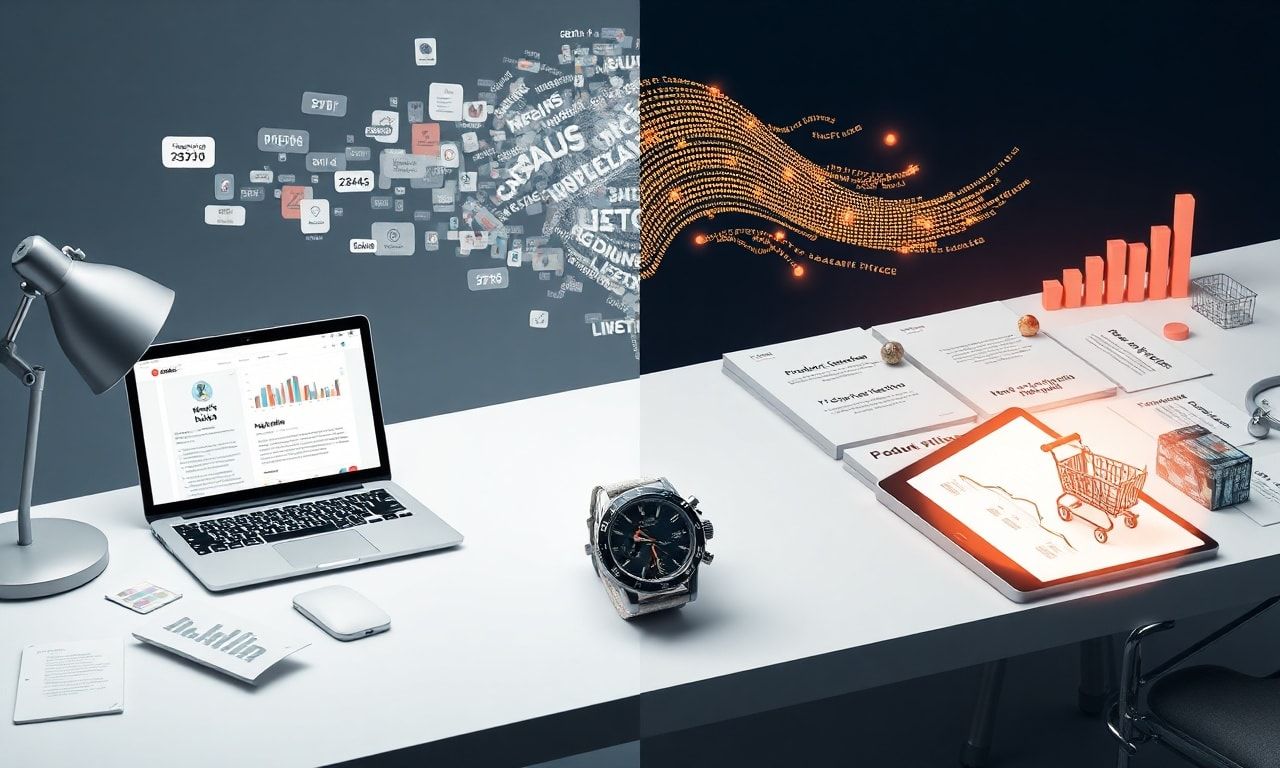
The Ultimate Guide to Writing High-Converting Product Descriptions for Dropshipping
Introduction: Why Your Product Descriptions Are a Make-or-Break Factor
In the hyper-competitive world of dropshipping, your product descriptions are not just text—they are your primary salesperson, your trust-builder, and your SEO workhorse. Unlike a traditional storefront, you can’t rely on customers touching the product or asking an associate questions. Your words must bridge that gap, convincing a skeptical online shopper to click “Add to Cart.” A compelling description can dramatically increase conversion rates, reduce returns, and build a loyal customer base. In this comprehensive guide, we’ll break down the art and science of crafting descriptions that sell, and reveal how leveraging the best AI tools for Etsy sellers can give you an unprecedented edge, even in the dropshipping arena.
Understanding the Dropshipping Customer Psychology
Before you write a single word, you must step into your customer’s shoes. The dropshipping customer often arrives with two inherent concerns:
- Uncertainty about Quality: Since they can’t see the item in person, they need vivid, reassuring details.
- Fear of the Unknown Seller: They are buying from you, not the manufacturer. Your description must build your brand authority.
Your description must proactively answer unasked questions, alleviate fears, and paint a compelling picture of the product in the customer’s life.
The Anatomy of a High-Converting Dropshipping Product Description
A powerful description is a structured narrative. Follow this hierarchy to guide your customer from interest to purchase.
H2: 1. The Headline (H3): Hook Them in Under 3 Seconds
Your headline must capture attention and include your primary keyword. It should state the core benefit, not just the product name.
- Weak: “Men’s Casual Watch”
- Strong: “The Minimalist Leather Watch: Effortless Style for Everyday Confidence”
H2: 2. The Benefit-Oriented Introduction (H3)
Immediately expand on the headline. Answer the question: “What’s in it for me?” Focus on the transformation the product offers.
- Example: “Tired of bulky, complicated watches? Our slim-profile design slides seamlessly under your cuff, offering reliable timekeeping with a touch of sophisticated elegance that works from the office to a weekend outing.”
H2: 3. The Detailed Bullet Points (H3): Scannable Perfection
Most visitors scan. Use bullet points to highlight key features and, crucially, translate them into benefits.
- Feature: “Made from full-grain leather.”
- Benefit Bullet: “Premium Full-Grain Leather Band: Ages beautifully over time, developing a unique patina for a look that’s distinctly yours.”
- Feature: “Japanese quartz movement.”
- Benefit Bullet: “Precise Japanese Quartz Movement: Guarantees accurate timekeeping within seconds per month—set it and forget it.”
H2: 4. The Immersive “Story” Paragraph (H3)
Weave the product into a narrative. Describe the experience, the feeling, the problem it solves. This builds an emotional connection.
- Example: “Imagine the satisfying click of the magnetic clasp as you start your day. This watch isn’t just an accessory; it’s a reminder to value precision and simplicity. It’s the detail that pulls your outfit together, earning compliments without shouting for attention.”
H2: 5. The Technical Specifications & Sizing (H3): Building Trust
For dropshipping, this section is non-negotiable. Be hyper-detailed to minimize “size guesswork” and returns.
- Include exact dimensions, weight, material composition, care instructions, and package contents.
- Use comparison charts (e.g., “Fits like a standard Apple Watch 42mm case”).
- Pro Tip: If possible, include a photo of the product next to a common object (a coin, a hand) for scale.
H2: 6. Social Proof & Urgency (H3)
Incorporate elements that signal popularity and scarcity.
- Social Proof: “Join 2,000+ satisfied customers who have upgraded their daily wear.”
- Gentle Urgency: “Handcrafted in small batches. Current stock is limited.”
Why the Best AI Tools for Etsy Sellers Are a Dropshipper’s Secret Weapon
You might wonder why tools designed for Etsy are relevant. The core challenge is identical: creating unique, persuasive, and SEO-friendly product copy at scale for an online marketplace. The best AI tools for Etsy sellers are specifically trained on e-commerce language and consumer psychology. Here’s how they revolutionize dropshipping description writing:
H3: Overcoming Creative Block and Scaling Production
Writing 50 unique descriptions is exhausting. AI can generate compelling, initial copy for multiple products in minutes, providing a first draft you can refine and personalize.
H3: SEO Optimization Built-In
These tools are adept at naturally integrating primary and long-tail keywords (like “best AI tools for Etsy sellers” or “personalized dog collar”) into fluent, readable text, improving your search visibility on platforms like Shopify and Google.
H3: Consistency in Brand Voice
You can train most advanced AI tools on your brand’s tone (e.g., “friendly and expert,” “luxurious and minimalist”). This ensures every product page, from kitchen gadgets to clothing, feels like it comes from the same trusted brand.
H3: Multilingual Capabilities
To tap into global markets, some AI tools can translate and culturally adapt your descriptions, saving you hundreds on professional translation services.
Top AI Tool Recommendations for Crafting Descriptions
While there are many AI writers, these are particularly effective for e-commerce product descriptions:
- Jasper (formerly Jarvis): Excellent with “Boss Mode” for long-form content. Its templates for product descriptions and AIDA framework are incredibly useful.
- Copy.ai: Offers a dedicated “Product Description” generator and a free tier, making it great for beginners.
- Writesonic: Specializes in e-commerce copy with templates for Amazon product features, descriptions, and Google Ads.
- Anyword: Goes beyond generation to predict the performance of your copy, giving you data-driven insights—a powerful feature for testing description variants.
- ChatGPT (OpenAI): With the right prompts, it’s a formidable free tool. The key is detailed prompting (e.g., “Write a 150-word product description for a dropshipped bamboo cutting board. Target keyword: eco-friendly kitchenware. Tone: warm and informative. Include bullet points on benefits.”).
A Step-by-Step Workflow: Human + AI Collaboration
The winning formula is AI-powered efficiency + human touch. Don’t just copy-paste AI output.
- Input & Brief: Feed the AI tool your product specs, key features, target audience, and brand tone.
- Generate Draft: Use the tool to create 2-3 description variants.
- Edit & Humanize: This is critical. Add personal anecdotes, specific cultural references, or humor. Check for accuracy and exaggerations the AI might have created.
- Optimize for SEO: Ensure your main keyword is in the H1 title, meta description, and naturally woven into the first paragraph and bullet points.
- Add Unique Value: Include details the AI can’t know. For example: “We personally tested this with over 50 pages of notes, and the battery life lasted a full week.”
- Format for Readability: Use short paragraphs, bold key benefits, and ensure plenty of white space.
Common Pitfalls to Avoid in Dropshipping Descriptions
- Using Supplier Copy: This is a cardinal sin. It leads to duplicate content penalties from Google and makes you look like a generic reseller.
- Being Overly Vague: “High-quality material” is meaningless. Say “304 stainless steel” or “600D Oxford polyester.”
- Ignoring Pain Points: Don’t just list features. Connect them to customer frustrations. “Tired of tangled cords? Our magnetic organizer solves that.”
- Forgetting Mobile Users: Over 60% of e-commerce traffic is mobile. Keep paragraphs short and scannable.
FAQ Section
H3: How long should my dropshipping product description be?
Aim for 300-500 words for most products. This provides enough depth for SEO and customer assurance without overwhelming them. Complex or high-ticket items may justify 700+ words. Quality and relevance always trump sheer word count.
H3: Can I really just use AI and be done with it?
No. Using raw AI output is a major mistake. AI is a powerful starting point and force multiplier, but it lacks genuine human experience, nuanced brand voice, and the ability to fact-check specific claims. Always edit, personalize, and verify.
H3: Are these AI tools worth the cost for a new dropshipper?
Absolutely. Consider it an investment in your store’s foundation. The time saved and the quality of the initial copy far outweigh the monthly fee (often $30-$100). Tools like Copy.ai even have free plans to start with. Inability to scale unique content is a primary reason new stores fail.
H3: How do I write descriptions for products I’ve never physically seen?
Rely on high-resolution videos from the supplier, customer reviews from AliExpress or the supplier’s site (for insights into pros/cons), and detailed supplier specifications. Be transparent in your writing: “Based on manufacturer specifications and customer feedback, this jacket is designed for…” This honesty builds trust.
Conclusion: Your Blueprint for Success
Writing masterful product descriptions for dropshipping is a blend of marketing psychology, SEO strategy, and efficient production. By understanding your customer’s mind, structuring your copy for conversion, and strategically employing the best AI tools for Etsy sellers to handle the heavy lifting, you transform your product pages from mere listings into persuasive sales engines.
You now have the complete blueprint. The only thing left is to execute.
Ready to transform your product pages and scale your store? Don’t let writer’s block or time constraints hold your business back. Choose one of the AI tools mentioned above—start with a free trial—and apply the framework in this guide to your top 5 products this week. The difference in clarity, professionalism, and conversion rates will be immediate. Start writing your way to higher sales today.