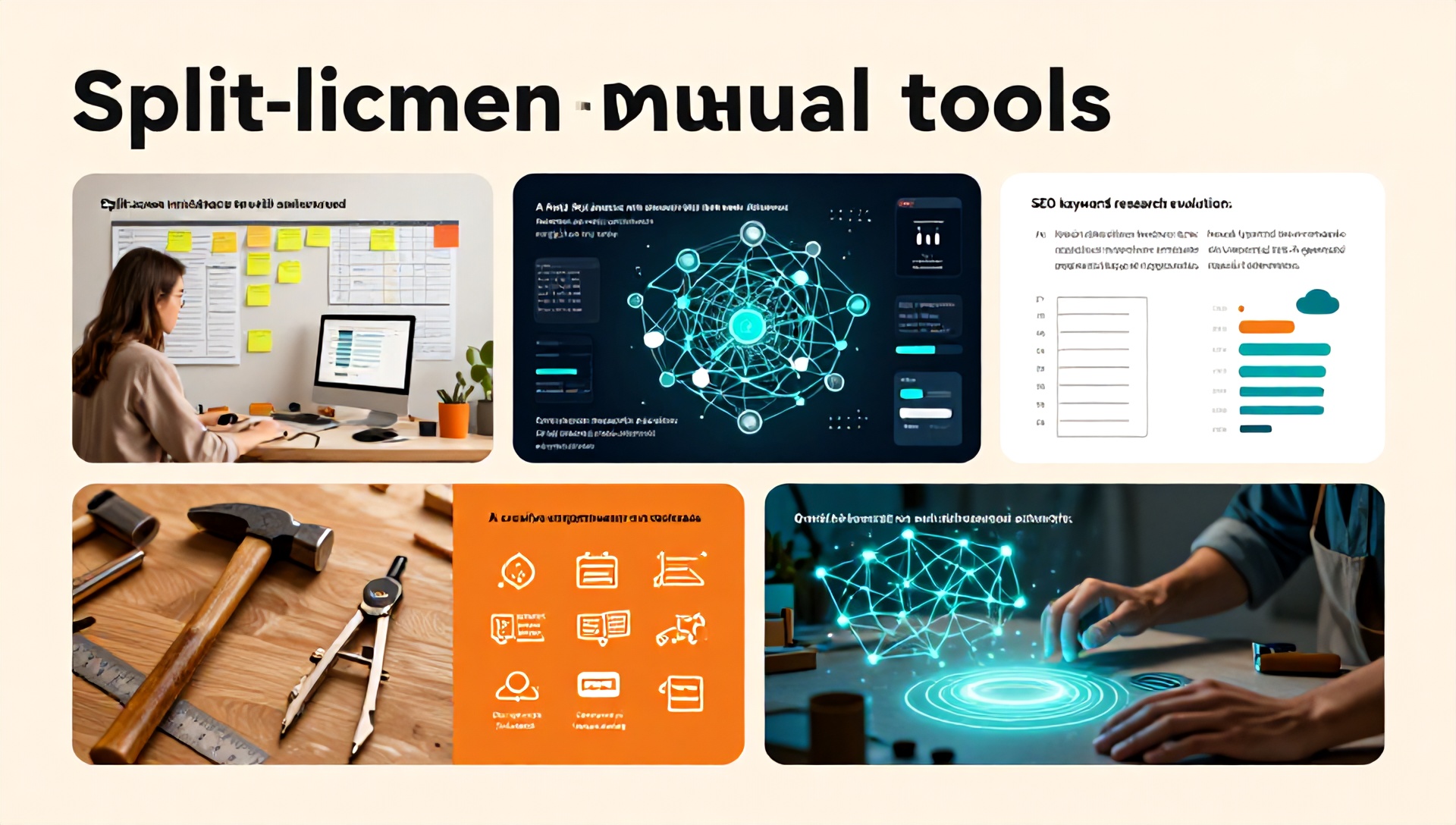
Best AI vs Traditional Tools for Etsy Sellers in 2026: The Ultimate Comparison
Introduction: The Evolving Landscape of Etsy Success
The handmade and vintage marketplace of Etsy is no longer just a quaint corner of the internet. It’s a bustling, competitive global economy where over 7.5 million active sellers vie for the attention of nearly 96 million buyers. In this high-stakes environment, the tools you use to manage, market, and grow your shop aren’t just helpful—they’re essential for survival and success. As we look toward 2026, a fundamental shift is underway: the rise of sophisticated artificial intelligence (AI) tools designed specifically for creative entrepreneurs is challenging the reign of traditional, manual software.
This comprehensive guide will dive deep into the best AI tools for Etsy sellers and compare them head-to-head with the established traditional tools. We’ll analyze their capabilities in key areas like SEO, listing optimization, customer service, and marketing, providing you with a clear, actionable roadmap to choose the right technology stack for your shop’s future.
Understanding the Core Difference: AI vs. Traditional Tools
Before we compare specific applications, it’s crucial to understand the philosophical and functional divide between these two categories.
Traditional Etsy Tools are rule-based and deterministic. They follow pre-programmed logic. Think of spreadsheet templates for inventory, manual keyword research databases, or basic scheduling apps. They require direct, step-by-step input and offer output based on static algorithms. Their strength lies in predictability and direct user control.
AI-Powered Etsy Tools, in contrast, are probabilistic and adaptive. They leverage machine learning (ML) and natural language processing (NLP) to analyze vast datasets—including your shop performance, competitor listings, and market trends—to generate insights, predictions, and even create content. They learn from outcomes and improve over time. Their strength is in automation, predictive analytics, and handling complex, multi-variable tasks that would be overwhelming to do manually.
Head-to-Head Comparison: Key Areas for Etsy Sellers
1. Listing Creation & SEO Optimization
-
Traditional Approach (e.g., Manual Research, Erank, Marmalead):
- How it Works: You use a tool to generate lists of high-volume keywords related to your niche. You then manually craft your title, tags, and description, strategically placing those keywords. You analyze competitor listings for inspiration.
- Pros: You maintain complete creative control. You develop a deep, hands-on understanding of Etsy SEO.
- Cons: Incredibly time-consuming. Prone to human bias and oversight. Struggles to identify emerging, long-tail keyword opportunities in real-time.
- AI-Powered Approach (e.g., Listadum, Vela, AI-powered features in new tools):
- How it Works: You input your product details or photos. The AI analyzes top-performing listings in your category, current search trends, and Etsy’s search algorithm patterns to generate optimized titles, descriptive bullet points, and comprehensive tags. Some tools can even write compelling product narratives.
- Pros: Generates data-driven, highly optimized listings in seconds. Continuously updates suggestions based on algorithm changes. Uncovers non-obvious keyword combinations.
- Cons: May require human editing to ensure brand voice and accuracy. Relies on the quality of its training data.
2026 Verdict: AI tools will become the standard for listing optimization. The speed, data-depth, and adaptive learning they provide are insurmountable advantages for scaling a shop. Traditional tools will serve as valuable supplements for sellers who want to “check the AI’s work.”
2. Product Photography & Visuals
-
Traditional Approach (e.g., DSLR Camera, Photo Editing Software like Adobe Photoshop, Canva):
- How it Works: You photograph your products, often requiring a lightbox, good camera skills, and significant time. You then manually edit each image for brightness, color correction, and background removal.
- Pros: Yields unique, high-quality, and brand-specific visuals. Full creative authority.
- Cons: Steep learning curve for photography/editing. Extremely labor-intensive. Inconsistent results can occur.
- AI-Powered Approach (e.g., AI Background Removers, Canva Magic Edit, AI Image Generators for mockups):
- How it Works: Use an AI tool to instantly remove backgrounds from product photos with one click. Generate realistic lifestyle mockups of your product in different settings by describing a scene. Use AI to upscale low-resolution images or correct colors automatically.
- Pros: Democratizes high-quality visuals. Saves hours of tedious work. Enables A/B testing of different visual styles (e.g., “minimalist white background” vs. “cozy cottagecore setting”) quickly.
- Cons: Over-reliance can make shops look generic. Ethical considerations around using AI-generated art for sale.
2026 Verdict: A hybrid model will dominate. Smart sellers will use AI tools for efficiency (background removal, basic edits) and traditional skills for brand differentiation (staged photography, unique styling). The best AI tools for Etsy sellers will seamlessly integrate into this workflow.
3. Customer Service & Communication
-
Traditional Approach (e.g., Pre-written Snippets, Manual Inbox Management):
- How it Works: You create template responses for common questions (“When will this ship?”, “Do you offer customizations?”) and copy-paste them, personalizing where needed.
- Pros: Allows for genuine personal connection. Builds strong customer relationships.
- Cons: Doesn’t scale. Leads to long response times during busy periods, hurting your “Star Seller” status.
- AI-Powered Approach (e.g., AI Chatbots, Smart Reply Suggestions):
- How it Works: An AI chatbot integrated into your shop or messages can answer 80% of frequently asked questions instantly, 24/7. More advanced systems analyze a customer’s message and draft a context-aware, polite response for you to approve and send with one click.
- Pros: Provides instant, 24/7 support. Frees you to focus on complex, high-value inquiries. Ensures consistent, prompt communication.
- Cons: Risk of impersonal or incorrect responses if not properly trained. Can frustrate customers with complex issues if forced through a rigid bot flow.
2026 Verdict: AI will handle the first line of defense. The winning strategy will use AI to triage and resolve routine queries instantly, flagging complex or emotional messages for a personal, human response from the seller. This combines scalability with authenticity.
4. Marketing & Social Media Content
-
Traditional Approach (e.g., Content Calendars, Manual Scheduling via Buffer/Hootsuite):
- How it Works: You brainstorm content ideas, create graphics and captions manually, and schedule them to post across platforms.
- Pros: Strategic, brand-coherent campaigns. Direct connection with audience.
- Cons: Major time sink. “Content burnout” is common among solo entrepreneurs.
- AI-Powered Approach (e.g., Copy.ai, Jasper, ChatGPT for captions, Canva Magic Write):
- How it Works: You give an AI tool a prompt like “Write 5 Instagram captions for a new handmade ceramic mug, highlighting its craftsmanship, in a warm and engaging tone.” It generates multiple options in seconds. AI can also suggest content calendars based on trending topics in your niche.
- Pros: Breaks creative block. Generates a month’s worth of content ideas in an hour. Can repurpose one product description into a blog post, Pinterest pin description, and email newsletter.
- Cons: Output requires heavy editing and fact-checking. Can sound generic without a strong guiding brand voice.
2026 Verdict: AI will be the indispensable creative assistant. Sellers will use AI to generate drafts, ideas, and variations at scale, then apply their unique voice and brand aesthetic to refine the output. The human is the strategist and editor; the AI is the prolific first drafter.
The 2026 Recommendation: An Integrated, AI-Augmented Workflow
The future for successful Etsy sellers isn’t about choosing only AI or only traditional tools. It’s about building an AI-augmented workflow.
- Discovery & Strategy (AI Lead): Use AI tools to analyze market gaps, predict trends for 2026, and identify high-opportunity keywords.
- Creation & Production (Hybrid): Use your traditional craft skills to make the product. Use AI tools to optimize the photography, description, and listing setup.
- Operations & Service (AI Foundation): Let AI handle inventory syncing, basic customer Q&A, and review solicitation. Step in personally for custom orders and issue resolution.
- Growth & Marketing (Hybrid): Use AI to draft your social media content, email campaigns, and ad copy. Use your human judgment to finalize, personalize, and build the community.
FAQ: Best AI Tools for Etsy Sellers
Q1: Are AI tools for Etsy against Etsy’s policies? A: No, using AI-assisted tools for tasks like keyword research, description generation, or customer service is not against Etsy’s policies. However, you must clearly disclose if the physical product for sale is AI-generated (e.g., AI art prints). Using AI to create your product listings and marketing content is generally considered an acceptable use of technology, much like using a calculator for your finances.
Q2: Won’t my shop lose its unique voice if I use AI for descriptions? A: Not if you use AI correctly. Think of AI as a talented but generic copywriter. You must provide it with clear direction, your brand’s style guide, and key selling points. Always edit and personalize the AI’s output. The final description should sound like you. The best AI tools for Etsy sellers allow for extensive customization and “training” on your brand’s voice.
Q3: As a small seller, can I afford these AI tools? A: The landscape is changing rapidly. Many powerful AI tools offer freemium models or affordable subscriptions starting at $10-$30 per month—comparable to traditional tool subscriptions. When you factor in the hours of labor they save, they often provide a significant return on investment (ROI). Start with one tool targeting your biggest pain point (e.g., listing creation) and scale from there.
Conclusion: Embracing the Future to Handcraft Your Success
The comparison between AI and traditional tools isn’t a battle with one winner. By 2026, the most successful Etsy sellers will be those who strategically blend the efficiency and data-power of AI with the irreplaceable human touch of creativity, craftsmanship, and genuine connection.
The best AI tools for Etsy sellers won’t replace you; they will empower you. They’ll automate the tedious, analyze the complex, and handle the repetitive, freeing up your most valuable assets—your time and creative spirit—to do what you do best: design, create, and build meaningful relationships with your customers.
Ready to future-proof your Etsy shop? Don’t get left behind in the 2026 marketplace. Begin your journey by testing one AI tool this week. Pick your biggest bottleneck—whether it’s writing listings, editing photos, or planning social content—and explore a solution. The goal isn’t perfection; it’s progress. Start integrating smart technology today to build a more resilient and thriving creative business tomorrow.